Isn’t a Barcode…Well…Just a Barcode? Sadly, Not Even Close.
The very first time someone asked if I knew what a barcode was I simply laughed and said “of course.” Little did I know I was going to get a life lesson schooling me on the ins and outs of the complexities of all the different barcodes. It turned out that there are so many different components that go into a barcode including different types, colors, and densities just to name a few. And they are just like technology…ever changing! However, it was really interesting finding out all the amazing things a “simple” little barcode can do.
Actually, they really are not that scary at all. But you will need some basic knowledge to understand what works best with your business. If you are printing distribution labels and tags, and you are using scanning equipment, you will want to decide which ones work with your software system. You may even want to do a different type of barcode for your marketing efforts. There are so many out there including 1D, 2D, and now 3D and even 4D barcodes in the works. Here are some examples of common 1 and 2D barcodes:
1D (One-Dimensional) Barcodes Examples:
UPC Barcodes
Code 39
Code 128
ITF
Codarbar
2D (Two-Dimensional) Barcodes:
QR Code
PDF417
Maxicode
Datamatrix
Doing a little research online for the basics is a tremendous help. Or just speaking to a knowledgeable person in the printing industry is probably even better. They will have the expertise to guide you to the correct barcode for your needs, which could be multiple types depending on your business needs. Play with online generators, take a look around, and talk to a few people. Barcodes should be fun and not intimidating .

Tuesday, August 1, 2017

Wednesday, June 21, 2017
How Important are Scanners to your Business?

If you are in an industry where you use handheld scanners,
then you already realize how critical they are to your business. A scanner
really is everything. They help transmit all types of data through a system.
Whether it is an intricate system of conveyor belts, or something as basic as
scanning in a membership card, the data they secure is invaluable. If you are trying to increase business, a scanner could be a great way to increase your efficiency by taking some of the
workload from your staff with automation, and giving them different responsibilities;
freeing up their time for other critical duties that can further your business growth
plan.
Starting down the road of purchasing scanners can seem a bit
daunting. There are so many variables to
choose from, it could make the decision a bit overwhelming. Honeywell has a great
solutions
tool to help you choose which path of scanners could be best for you. But
truthfully, although it is a good start, talking to an expert can be the best
thing for you to do when in doubt. If
you have a point of sales system, or work with inventory management software,
an expert guiding you through the process is a great way to ensure you get
exactly what is best for your business.
Tuesday, May 23, 2017
What Could Be Going Wrong…Or Right…with My Shipping Process?
So many things go into successful shipping processes for any
business. And we do mean a ton of
things. From budgets to supplies and everything in between, there are many
little pieces that make up the full puzzle. It is very easy for one of those
pieces to change shape and really effect what the puzzle is supposed to look
like. It is incredibly important to know and understand every facet of the shipping
process in order to effectively evaluate, and trouble shoot, the efficiency of
any program.
The shipping and distribution industry is constantly evolving. Understanding
your current processes and procedures is imperative, but so is keeping up to
date on trends and other variables that could affect your business cycle. For
example, one factor that not many distribution centers consider is weather. Not
inclement weather in this case, although that can definitely affect things; but
in the case I am referring to is the way customers order. The apparel industry
sees this the most, and it can really change your forecasting model. What is normally purchased by customers in
May could change to February. And your
shipping center needs to be prepared for that shift. In fact, according to an article
by Paul Myerson on Industry Week, this type of predictive analysis is now being
taught at the Fashion Institute of Technology as a way to better predict trends
in the market. This information can keep your fulfillment centers out of a bind
by being able to prepare for the influx of orders; or conversely the opposite.
So where do you start with so much to evaluate? Well, you go back to
basics. Were there times where your center excelled? Were there times when it failed in some way?
Compare the two. That is always a great
start.
- · Did you have a huge amount of unexpected orders? Or the opposite?
- · Plenty of supplies on hand? Or ran out and operations shut down?
- · Did you get new software/equipment and had to work out the bugs?
- · Did you have enough staff?
- · Were your sales projects on point?
Just asking a few simple questions gives you a starting place and you
can go from there. Targeting those little pieces can make your distribution
center much more efficient and increase profitability.
Tuesday, May 9, 2017
What In The World Is An Integrated Label and What do You Do With Them?
Do you ever come across that one product that ANY business can use?
That product is an integrated label. It’s
really cool actually. It is a label and
a form on one 8.5 x 11” or 14” cut sheet. They run through a laser printer, and
they run through them well. They have
special liners on the back so the forms stay flat so no costly jams. They are made with 24# mocr paper; which
means they are not too thick or not too thin.
So How Do You Use Them?
That really depends on the market you are in. Distribution, fulfillment and retail stores
use them as a shipping label/packing list combination. They also sometimes use
them for inventory and carton labeling. Restaurants and Bakeries use them as
order forms where they use the label to put on a ticket or the food item to be
delivered. Pharmacies have used them for labeling packages and boxes. Auto Service and Parts centers use them as
both a service form AND a sales form for parts.
These are just a few. Invoicing,
notices, memberships…the list really goes on and on.
So Are They Always Blank?
Not always. That is where the
business process comes in. There are
times it saves money for a business to just get their integrated labels blank
because they are printing in only black or very little information. They also may change forms frequently as
well, so blank is best. However, some businesses use a standard form that may
have a lot of toner coverage and high color.
If that is the case, order a custom integrated form with information
preprinted will save time and toner. Just re-run through the printer and print
only the information you need.
Tuesday, April 25, 2017
Yes…Your Business Still Needs Envelopes!
We are definitely in the digital age. We can email, Dropbox, ftp, Facebook; basically use all kinds of methods to send and receive documents and information. Some are even very secure methods. However, there are still forms that legally can’t be sent electronically. We still have to use the postal service from time to time to send out sensitive information. Envelopes are a must for this.
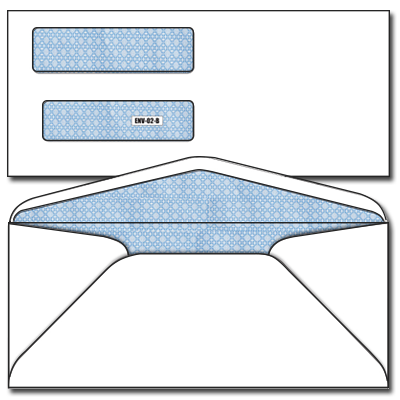
Now, envelopes are not just for sensitive materials. Because we are in a digital age, many things simply get overlooked because of the sheer volume of information. Your email account is a great example. We get flooded with emails, and in our mad dash to empty our account, we sometimes delete things we shouldn’t. Or…we simply ignore a normally great promotion because we don’t stop to take the time to interact with the message.
That is where an envelope comes in handy. It forces you to open up the thing to see what’s inside. Although we don’t enjoy getting an invoice or bill, we do like getting checks and promotions. The odd thing about using an envelope is the less that is printed on it, the more intrigued we are about what is inside. And although envelopes of all types including double window envelopes, seem like it could belong in the stone ages in this day and time, it really does still have a great place and even better need.
So many people say “what about the environment?” There are many recycled options available, and you can even reuse them in your home. You wouldn’t believe the really creative ways to use old envelopes. So don’t forget these gems when you are getting your business supplies. They never run out of style.
Monday, April 17, 2017
Laser Printable Cards Are More Than Just Insurance Cards!
Many people think you can only use laser membership cards for auto insurance cards and medical cards. Of course they are great for those industries. And I think originally that seemed to be the main market, but now they are so diverse you can use them for a ton of things. And they save so much time and money, why not give them a go!
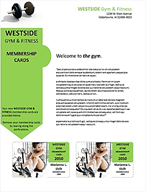
One of the best uses of laser cards is for registration for summer activities, gym memberships, and retail promotions. The card portion doesn’t necessarily have to be used for identification of a person. Many have put coupons, confirmations for sign ups, free items, and much more. They have been becoming increasing popular for targeted mailing to include a promotion to get customers through the door. Another great use is a quick reference guide. Maybe you have an item that requires a fast set of instructions, or maybe a temporary password or access code. It is a great peel out card to keep with you.
The great thing about laser printable cards is combining low per piece cost, with simplicity of use, versatility, and durability. They are water and heat resistant. And because you can purchase either pre-printed or completely blank stock, you have more control of your costs and time efficiencies.
They are definitely worth a try.
Wednesday, March 15, 2017
How Does a Little Blank Label Affect Such a Huge Part of the Shipping World?
For such a little label, blank thermal and direct thermal labels are a
huge part of what makes the distribution center world go round. More and more
businesses, regardless of size, are moving towards thermal /direct thermal
options to ship out their products. Why is that exactly?

Very small retail establishments were using the traditional method of
printing out their packing list and label, folding it, putting it into an adhesive
backed plastic pouch, and affixing it to the package. As technology has
evolved, and more product options have been developed, many are discovering
that even the smallest of establishments can benefit from a more efficient,
cost reductive, method of shipping their products to their customers. There
have been lots of great products introduced to help in this area, but none as
much as direct thermal and thermal labels.
What makes them unique is you don’t have to run them through a laser
printer, so the cost for printing consumables goes down tremendously. Instead, depending on the material choice,
you run your labels through a thermal printer, which uses a thermal ribbon, or
a direct thermal printer, which uses a print head, to create the image on the
label. Either method is much more cost effect than toner in most cases. The
standard size for most companies is a 4x6” which is perfect for most shipping
labels. Larger fc’s utilize smaller sizes of thermal labels to print tracking
barcodes. These barcodes are used internally to track where the package is
within the facility. There are so many great ways to customize your process
using a variety of sizes, materials and adhesive options.
If you are struggling with speed and efficiency, going with direct
thermal or thermal labels could be the answer. It is definitely worth the
investment.
Subscribe to:
Posts (Atom)